





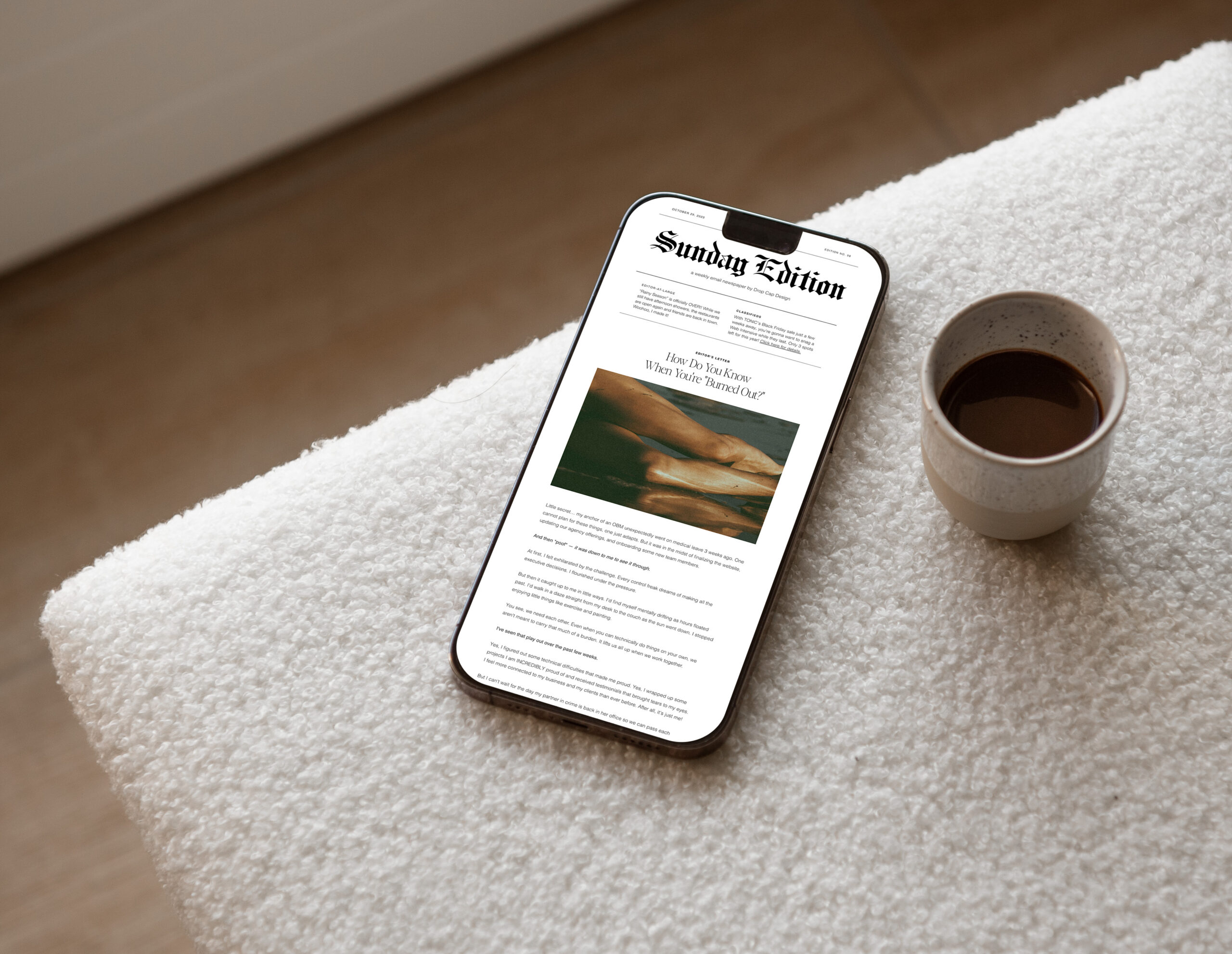





There are many things we build with a long-game strategy at Drop Cap, but The Sunday Edition was not one of them. We never dreamed it would become the heart of our brand.
When I first started our viral weekly newsletter, I was told I needed an email list (although I wasn’t totally convinced why), and I knew I was supposed to send out an email (but I wasn’t sure what to include).
It was COVID. I was listening to all the marketing podcasts and feeling the email FOMO, but I wasn’t clear on the strategy.
Do I email first? Or blog and then email about it? Am I giving updates? And… about what?
In trying to find examples of emails I liked, I couldn’t find anything that sparked my interest. So I did the simplest thing and wrote a blog post first. While writing the recap, I had the thought that I wanted my email to feel like more than just an email.
Even at that time, I had inbox fatigue.
I brainstormed about what I wanted the experience of reading my emails to feel like. I remembered back in high school when I got my first email address, sitting down with a cup of coffee and poring through my very sparse inbox, which was primarily filled with J. Crew and Anthropologie sales. I felt like Carrie Bradshaw on a deadline, and I knew my big, important life was just around the corner if I could only get to college.
And in that state of reminiscing, the very first Sunday Edition was born.



For the past five years, The Sunday Edition has grown, expanded, and become the cornerstone of our brand. I stopped writing blog posts just to have a reason to send an email. The more I wrote, the more ideas I had on things I wanted to write about.
I had no idea then how many people would send me notes each week, saying that it’s a part of their weekend ritual. They sit down with a copy of coffee and consume The Sunday Edition, exactly how I pictured them doing so. I’m amazed how many people first encounter me and the Drop Cap brand simply by subscribing to The Sunday Edition.
I didn’t mean to become known for our emails. I thought it was just another content strategy I was late to. But here we are, years later, and it’s become something I’m most proud of.
I’d like to walk you through how and why I think it was such a success, and how you can create something similar in your own business.

The Anatomy of a Newsletter People Actually Want to Read
So, how did this become our most beloved piece of content?
Here’s what makes The Sunday Edition work:
1. Lead with the letter, not the pitch.
Many newsletters center on a story that quickly transitions into a pitch. I’m so used to it by now that it doesn’t bother me, but I notice, and I take those marketing stories with a grain of salt. I skim read.
But I quickly transitioned into something different. I told stories just to tell stories. Full stop. I just wrote what needed to be said, and for a while, I entirely forgot to pitch.
And I learned that people don’t subscribe just to have one more outlet to be sold to. They sign up (primarily) to be entertained, educated, and distracted.
They want something helpful and inspiring to break up the client requests, customer support, and catalog emails they’re already receiving and trying to avoid.
That’s why The Sunday Edition always begins with a personal essay from me, a true editor’s letter. If social media is the highlight reel, The Editor’s Letter is a coffee date where I give you the real story.
It’s real, in the moment, and usually a glimpse into what I’m working through and discovering not just as an art director, but as a fellow entrepreneur who’s learning how to lead a team, grow a business, and build a life.
Takeaway: Invite your readers into your world. Don’t write like a brand. Write like a person with something worth saying. Channel your inner Carrie.
2. Create a predictable structure, then get creative.
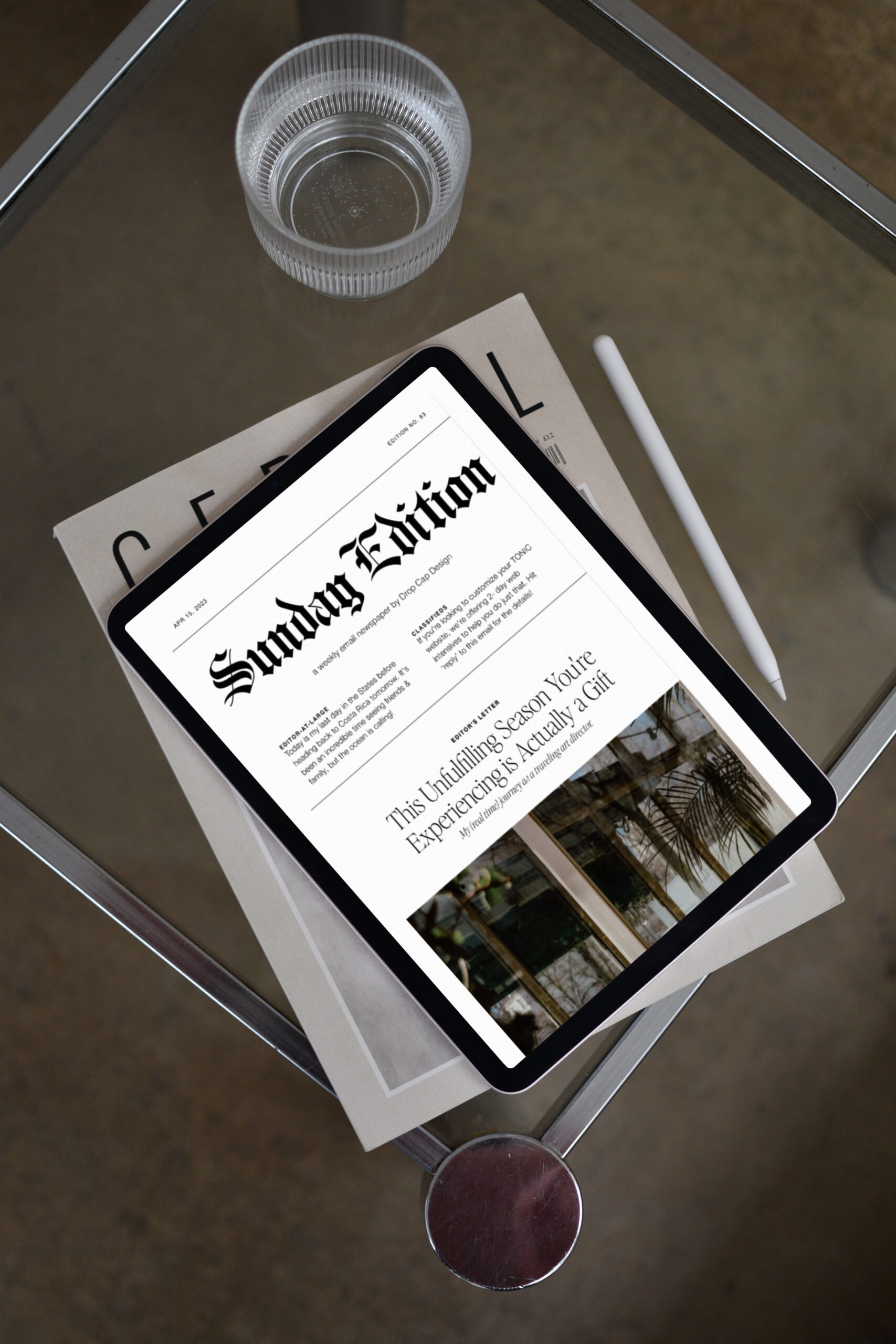
Every Sunday, our readers know what’s coming:
- 🌹 A rose & thorn
- ✍🏼 An editor’s letter
- 🧠 A branding exercise
- 🕯️ A peek behind the scenes
- 📓 Journaling prompts
- 💌 The Loving List
It’s familiar and easy to digest, but within those boundaries, I’m untethered. I tell stories about my family, analyze the brands I’m interested in, and even share my controversial takes on the online space as a whole.
The “columns” have grown over the years as I receive new recommendations and discover what you want to hear more of. It’s become a moodboard of my business, our work, my life, and our collective love of design.
It’s the email I dreamed of receiving back in the day.
I created what I myself had been looking for.
Takeaway: You will have 10x the ideas when you create a “formula” to follow. Start by writing what you’d want to consume.

3. Build intimacy through consistency.
Every week, I keep a journal and do some form of writing for at least 30 minutes. Some days, I’ll use a prompt; others, I’ll expand on a conversation I’ve had with someone else and my thoughts about it. I might even process a documentary I’ve watched or a podcast I’ve listened to.
What needs to be said that no one else is saying? What do I wish someone would say to me?
I try to write the hard truths, the nuances I’m noticing. I write with complete permission and then revisit with a sharper pen before pushing publish.
And most importantly, I do not end my weekend without sending it out. Most weeks, it’s in your inbox before your day has begun. Other times, it’s an evening reflection. But it’s my only thing to get done on a Sunday and a great reason to tuck into a quiet corner and write.
This consistency and real-time honesty is why people forward The Sunday Edition to their friends. It’s why so many hit reply every week to carry on the conversation. It’s also why it gets screenshotted and shared in stories.
Takeaway: The fastest way to stand out is to sound more like yourself. Say the thing you’re tempted to keep private. Let your subscribers see and know the real you.
What Happens When You Build Something You’d Read Yourself
It’s incredible how quickly you’ll consider yourself a writer when you keep permitting yourself to publish what you’d want to read yourself.
It builds trust, not just with your audience, but with you.
You become a better writer by writing more often. A sharper strategist by staying in conversation. A more honest creator when you give yourself a deadline.
And the ripple effect is real. The Sunday Edition has led to many clients, product sales, collaborations, and heartfelt conversations I never could’ve engineered on social media.
It’s become our voice and my personal outlet. And in finding my own voice, I gave others the courage to use theirs too.
If you’re not already on the list, we’d love to have you.
But most importantly, I’ve loved seeing how others have taken the spark of The Sunday Edition and turned it into their own formula. It’s what I always intended, to be the source of inspiration for someone else to mirror their own desires for their content.
You can so easily turn ‘Email Marketing’ into something bigger than a newsletter.

Ready to Write Your Own Sunday Edition?
If you’re dreaming of starting something like The Sunday Edition for your own brand, here’s what I’d do if I was starting from scratch today—
1. Envision a ritual for your reader.
Examples:
- A wellness coach could create The Reset — a Monday morning mindset ritual that helps clients reframe their week.
- A copywriter might send First Draft Friday — a raw, unfiltered look at creativity in progress, with writing tips and prompts included.
Think of something unique that you know your audience wishes they could get access to, whether it’s your routines, your first drafts, or your journal. What would create an exclusive, intimate experience with your brand?
2. Start the conversation, but don’t finish the dialogue.
Great newsletters compel someone to hit reply, share it with their friends, or put it into practice. Don’t close the loop, keep your audience curious. The loving list at the end of our Sunday Editions is a great way to put in a few books, movies, podcasts, and shopping finds from my day-to-day life and is usually the section that inspires the most replies.
Yours could be a roundup of memes, a playlist, a bucket list, or even funny one-liners you’ve found on threads. Don’t stay in the role of the educator, merge into the lane of a friend.
3. Create structure as a starting point.
Like I said, the columns that developed in the more recent Sunday Editions have made it easier to stay consistent. I know where my starting points are and I can rif and rearrange from there. I’m telling you, as someone who usually really fights against structure, this was a big breakthrough for me and I couldn’t recommend it more. Start small (you’ll see from the first Sunday Edition I just had a blurb and a loving list) but as you have new ideas and recommendations, you can grow and expand from there.
4. Grow outside your inbox.
This took me awhile to understand and implement, and I’m still trying to find ways to repurpose and expand the insights from The Sunday Edition. There are so many articles I spent hours researching and writing that never made it anywhere other than to my subscriber list (lucky them) but I do feel that great content deserves to be shared, and the more you can expand your reach by sharing and repurposing your writing on other channels, the more your subscriber base will grow.
Everyone wants a viral newsletter. But virality isn’t a strategy, it’s a side effect of great ideas.
Instead of aiming to explode, try creating one thing in your business for your closest core. What would your brand loyalists want to see from you?
Show up regularly. Make it beautiful. Make it useful. Keep it you.
Over time, your newsletter won’t just be a place you write… it’ll be a place your audience wants to live. And most importantly, how they’ll reach out to work with you.
To see this in action, join us.
Subscribe to The Sunday Edition and get a fresh issue every week, I’d love to see you in your inbox.